How to Select High Chrome Blow Bars for Impact Crushers
Monday, 15 June 2026
Introduction
Impact crushers are widely used across mining, quarrying, recycling, cement, and aggregate processing industries for reducing large feed materials into smaller, usable sizes. At the heart of every impact crusher lies one of its most critical wear components — the blow bar. The efficiency, wear life, and productivity of the crusher depend significantly on selecting the correct high chrome blow bars.
Choosing the wrong blow bars can lead to excessive downtime, reduced throughput, poor product quality, and increased operational costs. On the other hand, selecting the right high chrome alloy and design can significantly improve crusher performance, increase wear life, and reduce maintenance frequency.
This guide explains the most important factors to consider while selecting high chrome blow bars for impact crushers and how industrial operators can maximize productivity through informed material selection.
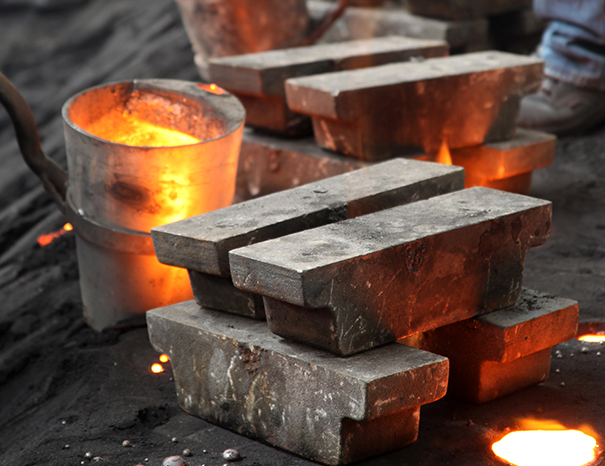
High chrome blow bars are wear-resistant crusher components manufactured using high chromium white iron alloys. These alloys typically contain 20% to 28% chromium and are engineered to offer exceptional abrasion resistance in highly demanding crushing environments.
Compared to standard manganese steel blow bars, high chrome blow bars provide superior hardness and wear resistance, especially when crushing abrasive materials such as granite, basalt, asphalt, slag, limestone, and recycled concrete.
The first and most important factor in selecting blow bars is understanding the feed material being processed. Different materials create different wear patterns and impact loads.
Highly abrasive materials such as granite, quartz, and basalt demand blow bars with higher chromium content and superior hardness. In contrast, less abrasive materials may perform well with medium chrome or martensitic blow bars.
If the feed material contains excessive tramp iron or uncrushable contaminants, extremely hard blow bars may become vulnerable to breakage. In such applications, operators may need a balanced alloy composition offering both hardness and impact resistance.
Understanding the abrasiveness, moisture content, feed size, and contamination level of the material helps determine the ideal blow bar metallurgy.
High chrome blow bars are available in multiple chromium compositions. Common grades include:
- 20% Chrome Blow Bars
- 23% Chrome Blow Bars
- 25% Chrome Blow Bars
- 26%+ Chrome Blow Bars
Higher chromium content generally improves abrasion resistance and wear life. However, extremely high hardness may reduce toughness under severe impact conditions.
Selecting the right alloy requires balancing abrasion resistance with impact strength. A reliable wear parts manufacturer can recommend the ideal composition based on operating conditions.
Crusher operating parameters also play a major role in blow bar selection. Rotor speed, feed size, crushing chamber design, and material throughput directly affect wear patterns.
High-speed crushing operations generate more abrasion and may require harder blow bars. Larger feed sizes generate greater impact forces and may require blow bars with better toughness.
Operators should also evaluate the type of impact crusher being used. Horizontal Shaft Impactors (HSI) and Vertical Shaft Impactors (VSI) experience different wear mechanisms, and blow bar selection should align accordingly.
The shape and design of the blow bar affect crushing efficiency and wear distribution. Properly designed blow bars improve material flow, maintain consistent product sizing, and reduce localized stress concentrations.
Manufacturers may offer different profiles such as:
- Flat Blow Bars
- Reinforced Blow Bars
- Heavy Duty Blow Bars
- Multi-Groove Designs
Selecting the correct design depends on crusher compatibility, feed material, and required production output.
One of the biggest challenges in crusher operations is balancing wear life with performance. While extremely hard blow bars may last longer under abrasive conditions, they may become brittle under high-impact applications.
Similarly, softer alloys may resist breakage but wear out faster.
The ideal blow bar should deliver:
- Consistent crushing performance
- Long operational life
- Reduced maintenance downtime
- Stable product gradation
- Lower overall operating costs
Rather than focusing only on initial purchase cost, operators should evaluate the total cost per ton of material processed.
Proper heat treatment significantly affects the quality and performance of high chrome castings. Controlled heat treatment improves carbide distribution, hardness consistency, and structural integrity.
Poorly manufactured blow bars may suffer from internal porosity, uneven hardness, cracking, or premature failure.
This is why sourcing crusher wear parts from an experienced and technically capable manufacturer is essential. Reliable foundries follow stringent quality control measures, advanced metallurgical testing, and precision casting practices to ensure consistent product performance.
Operators should always work with manufacturers who understand crusher wear applications and can provide customized solutions for different crushing environments.
In modern crushing operations, downtime can become extremely expensive. Blow bars that are difficult to install or replace may increase maintenance time and reduce operational efficiency.
Selecting blow bars with precise dimensional accuracy and proper fitment ensures:
- Faster installation
- Reduced rotor imbalance
- Improved safety
- Lower maintenance delays
Precision-engineered high chrome blow bars help operators maintain consistent production schedules while minimizing operational interruptions.
Every crushing application is different. A mining operation processing hard granite requires a different wear solution compared to a recycling plant crushing concrete and asphalt.
Experienced wear parts manufacturers often provide application engineering support to help customers select the correct alloy, hardness range, and blow bar configuration.
This technical consultation can significantly improve crusher efficiency and reduce long-term wear costs.
Selecting the right high chrome blow bars for impact crushers is not simply a purchasing decision — it is a strategic operational decision that directly impacts productivity, wear costs, maintenance schedules, and overall plant profitability.
By evaluating feed material characteristics, alloy composition, crusher operating conditions, blow bar design, wear resistance, and manufacturer expertise, operators can significantly improve crusher performance and achieve longer wear life.
Melco Castings manufactures high-quality high chrome blow bars and wear-resistant castings engineered for demanding crushing applications across mining, aggregate, cement, and recycling industries. With strong metallurgical expertise and precision manufacturing capabilities, Melco Castings delivers durable crusher wear parts designed for consistent performance and long operational life.
FAQ
High chrome blow bars are used in impact crushers for crushing abrasive materials such as granite, basalt, concrete, asphalt, and recycled aggregates. Their high chromium content provides excellent wear resistance and extended service life.
The lifespan of high chrome blow bars varies depending on operating conditions, feed material, and crusher settings. They generally last longer than standard alloys when processing abrasive materials due to their superior wear resistance.
High chrome blow bars are ideal for abrasive materials such as granite, basalt, limestone, concrete, and recycled construction waste where maximum wear resistance is required.
Manganese blow bars provide excellent impact resistance and toughness, while high chrome blow bars offer greater wear resistance. Manganese is preferred for high-impact applications, whereas high chrome is best for abrasive materials.
Consider factors such as material abrasiveness, feed size, moisture content, crusher type, and expected wear life. High chrome alloys are typically recommended for abrasive applications, while manganese alloys are suitable for high-impact crushing environments.
For inquiries, you can reach Melco Castings through the website melcocastings.com, via email at info@melcocastings.com , or on WhatsApp at +91 9818436295 to discuss your requirements.
Author Name - Melco Castings